Tap anywhere outside image to close
Appearance tells you almost nothing about what's actually in a pool. Hygiene is a function of filtration, sanitation, and testing — never of how the water looks.
A pool can look flawless and still carry bacteria, viruses, or parasites. Every swimmer adds sweat, oils and organic matter to the water — without correctly sized filtration and consistent sanitation, that load accumulates long before the water visibly changes.
Clarity is a downstream symptom of good engineering — never a substitute for it. See Water Chemistry and Water Clarity for the underlying engineering.
Any one of these warrants testing and correction — not a wait-and-see approach.
| The Sign | What It Usually Means |
|---|---|
| Cloudy or dull water | Filtration undersized or overwhelmed |
| Green or yellow tinge, visible algae | Sanitiser residual has collapsed |
| Slippery walls or steps | Biofilm — sanitation inadequate for some time |
| Strong chemical smell | Chloramines — combined chlorine too high, not too much sanitiser |
| Eye, ear or skin irritation | Chloramine buildup, or pH outside safe range |
| Floating debris, poor floor visibility | Circulation or turnover deficiency |
Red, burning eyes are almost always too little sanitiser, not too much. See the exact chemistry targets →
Across treated pools, spas and water parks worldwide, outbreaks trace back overwhelmingly to six organisms — each with a specific route of exposure and a specific engineering control.
| Organism | Route | Causes | Engineering Control |
|---|---|---|---|
| Cryptosporidium | Ingestion | Watery diarrhoea, 1–3 weeks | Chlorine-resistant — removed only by filtration + coagulation, and UV |
| Giardia | Ingestion | Diarrhoea, cramps | Survives ~45 min of normal chlorine residual; filtration reduces load |
| Shigella | Ingestion | Severe, often bloody diarrhoea | Fecal-incident protocol + maintained chlorine residual |
| Norovirus | Ingestion | Sudden nausea, vomiting, diarrhoea | Killed by a properly maintained chlorine residual |
| Pseudomonas aeruginosa | Contact | Folliculitis ("hot tub rash"), swimmer's ear | Sanitiser residual + circulation, especially in hydrotherapy spas |
| Legionella | Inhalation (aerosol) | Legionnaires' disease, Pontiac fever | Water temperature control, aerosol management, jet/fountain disinfection |
Cryptosporidium and Legionella account for the large majority of documented pool-related outbreaks globally — the two organisms your filtration and water-feature design should be engineered specifically against.
Sources: US CDC, National Outbreak Reporting System and MMWR data on treated recreational water outbreaks (pools, hot tubs, water parks); PWTAG technical guidance on Cryptosporidium, Giardia and filtration in swimming pools (pwtag.org).
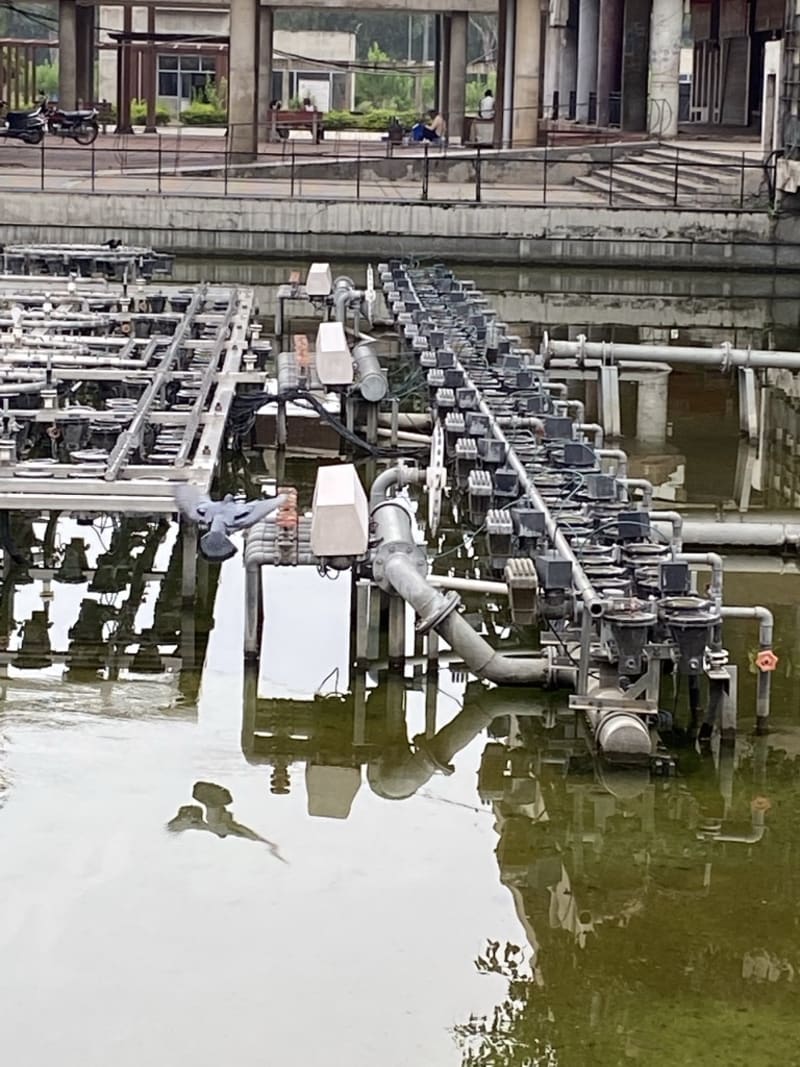
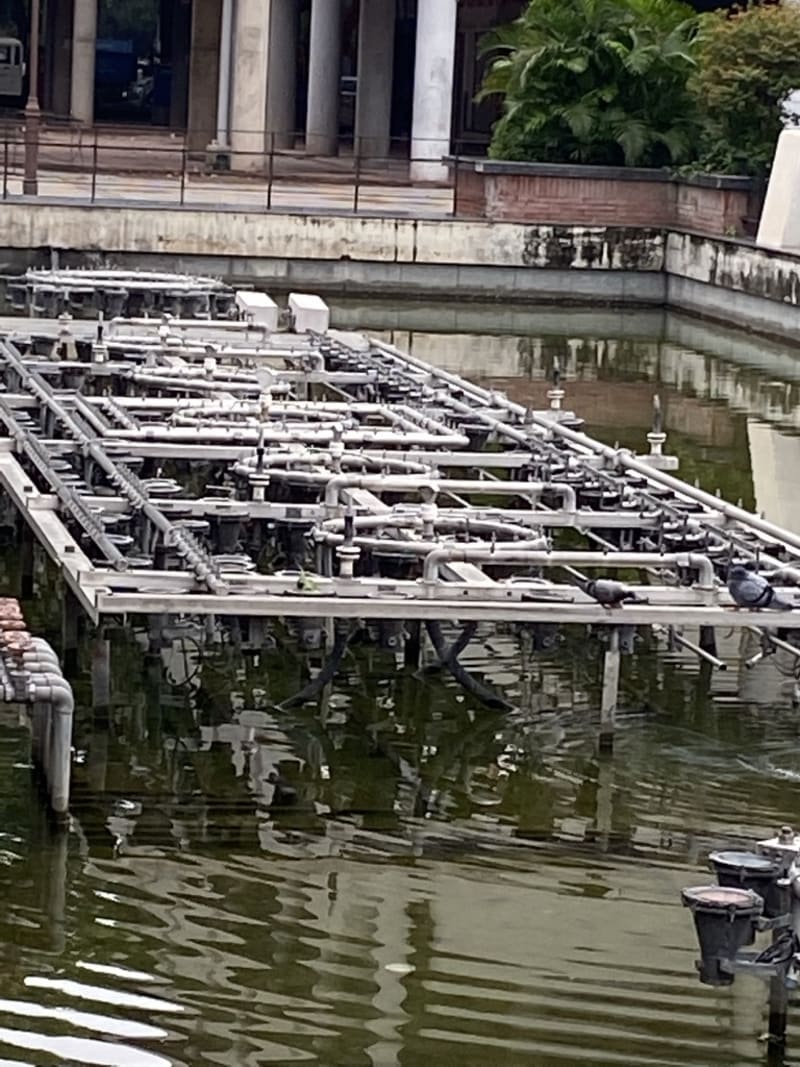
With a pool, the water itself is at least visible. With a musical fountain, the entire treatment story sits in a sump under the deck that nobody ever sees.
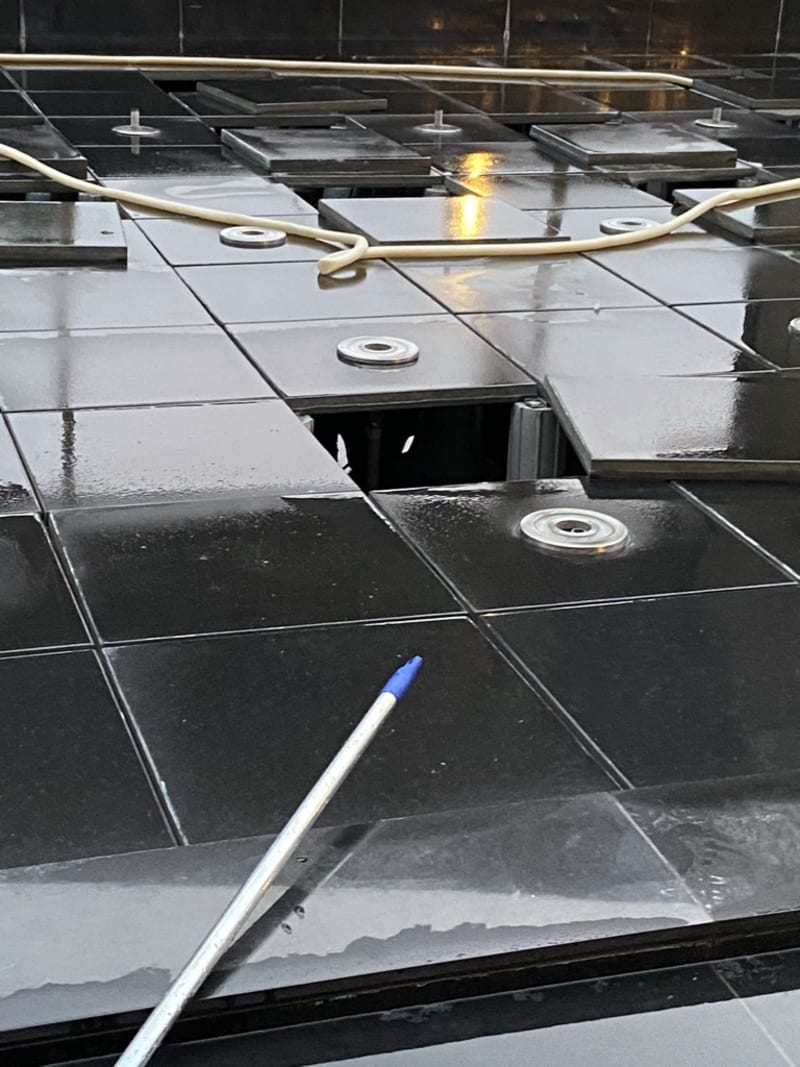
Water is drawn from a hidden tank, jetted through the deck, and recirculated back into that same tank — filtered and dosed, in principle, before it sprays again. The tank is rarely inspected. The jets and access covers are all anyone can see. And the feature is used hardest by exactly the users least likely to have reliable toileting hygiene: young children playing directly in the spray.
| Outbreaks linked to these features, 1997–2022 (US) | 60 |
| Infections resulting | 10,000+ |
| Hospital admissions, mostly children | 152 |
| Dominant causes | Cryptosporidium, Shigella, norovirus |
Outbreaks trace overwhelmingly to treatment failures in the recirculating tank — not one-off accidents, but the predictable result of a reservoir nobody is checking.
Source: US Centers for Disease Control and Prevention, "Waterborne Disease Outbreaks Associated with Splash Pads — United States, 1997–2022," MMWR Surveillance Summaries. Figures cover splash pads, interactive fountains and spray parks nationally — not a single facility or incident.
What lies beneath a musical fountain deck versus what a guest actually sees — the reservoir, its water, and the closed tile surface above it.
North India's dust-heavy summer moving into monsoon is the hardest stretch of the year for pool hygiene — a seasonal engineering load, not a chemistry failure.
| Monsoon Condition | Effect on the Pool |
|---|---|
| Heavy rainfall | Dilutes sanitiser, shifts pH |
| Dust and organic debris | Raises the filtration load |
| Warmth + humidity together | Favours bacterial and algal growth |
Testing frequency and service intervals should scale up through the pre-monsoon and monsoon months, not stay fixed year-round.